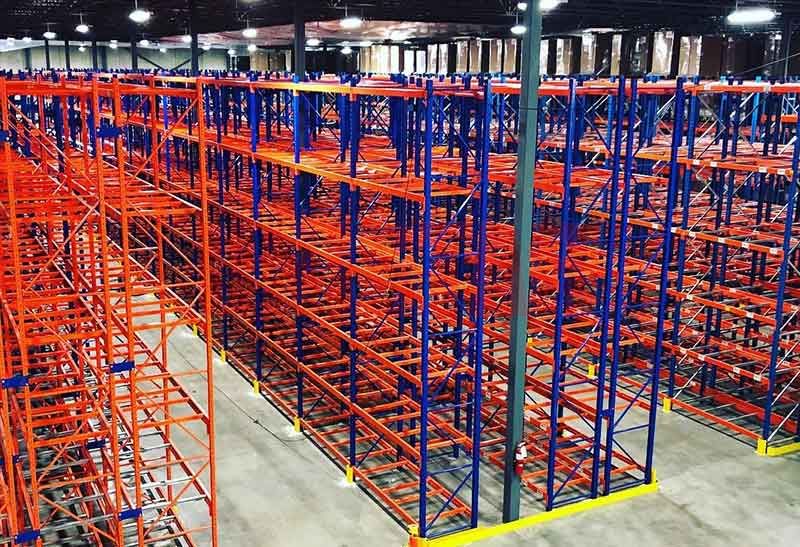
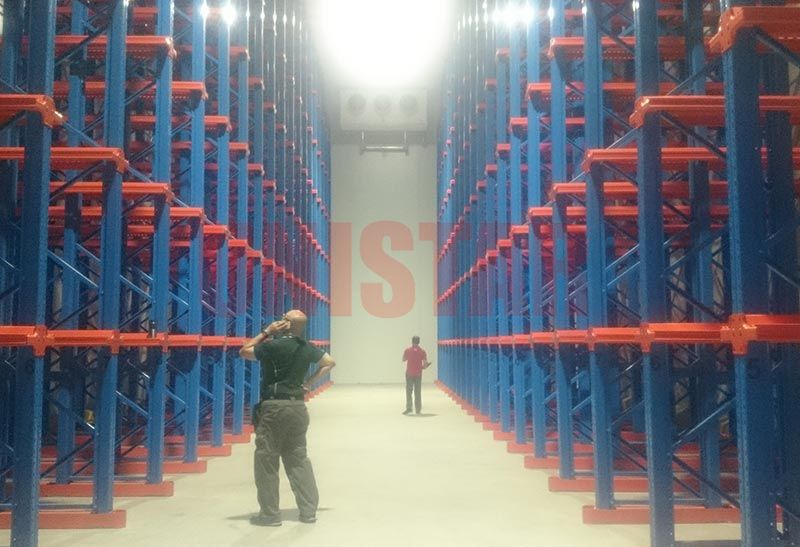
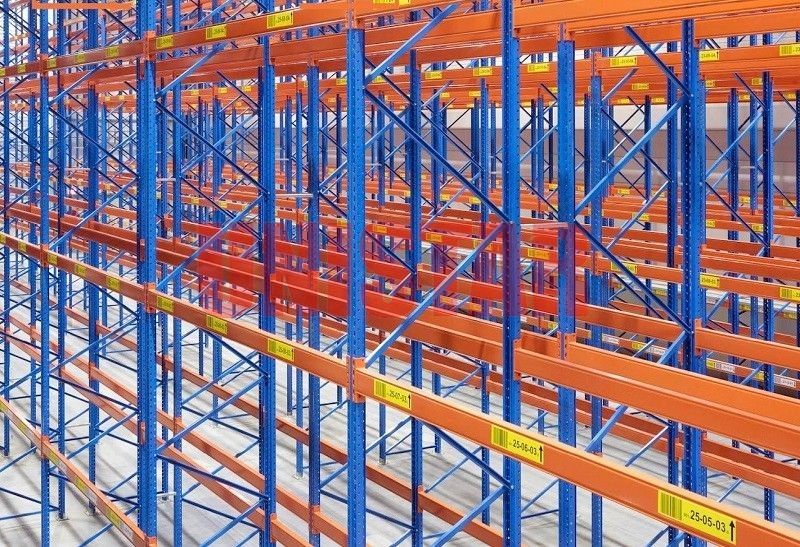
A warehouse racking system for cold storage must use limited refrigerated space efficiently while maintaining safe pallet handling, suitable inventory rotation and reliable operation under low-temperature conditions. Unlike a standard ambient warehouse, a cold room or freezer warehouse must account for temperature, condensation, pallet condition, forklift performance, insulated floors, refrigeration equipment and the cost of cooling every cubic metre of storage space.
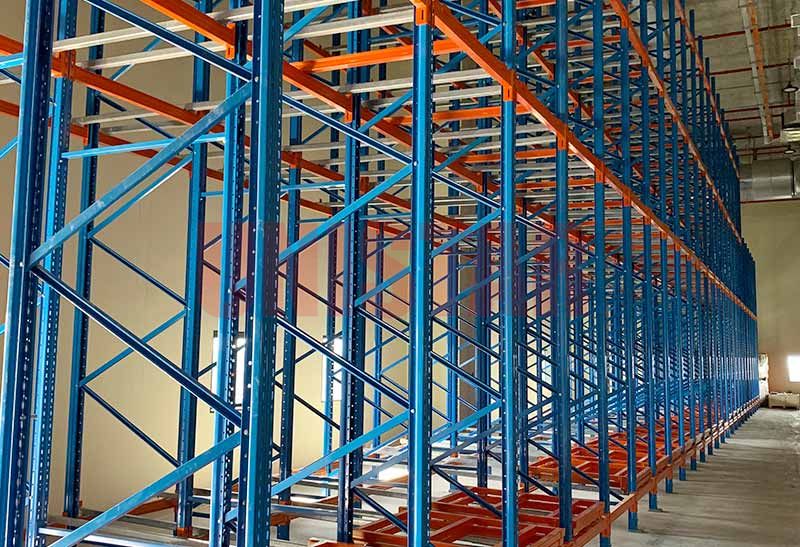
UNISTAR designs warehouse racking systems for cold storage according to the building dimensions, operating temperature, pallet specifications, SKU quantities, required storage capacity and inbound/outbound workflow. Available configurations include drive-in racking, radio shuttle racking, pallet flow racking, push back racking and selective pallet racking. The final solution may use one system or combine several rack types for bulk storage, fast-moving inventory and direct-access stock.

| Cold-store condition | Effect on racking design | Information to confirm |
|---|---|---|
| Expensive refrigerated floor space | Higher-density layouts may reduce the footprint required for a given number of pallets | Required pallet positions, available length, width and clear height |
| Low operating temperature | Material, finish and equipment suitability must be checked for the specified temperature | Normal temperature range and minimum design temperature |
| Condensation and moisture | Surface protection must match corrosion exposure and cleaning conditions | Humidity, condensation frequency and defrost conditions |
| Insulated warehouse floor | Rack anchoring must be coordinated with the floor slab and insulation construction | Slab thickness, reinforcement, floor heating and prohibited drilling zones |
| Restricted forklift movement | Aisle width and turning clearance directly affect usable storage density | Forklift type, turning radius, mast height and lifting capacity |
| Evaporators and air circulation | Rack height and placement must not block refrigeration equipment or required airflow | Evaporator locations, air direction and maintenance clearance |
| Fire protection requirements | Rack layout must coordinate with sprinklers, exits and local fire regulations | Sprinkler arrangement, flue-space requirements and authority requirements |
| Racking system | Recommended storage condition | Inventory access | Main design consideration |
|---|---|---|---|
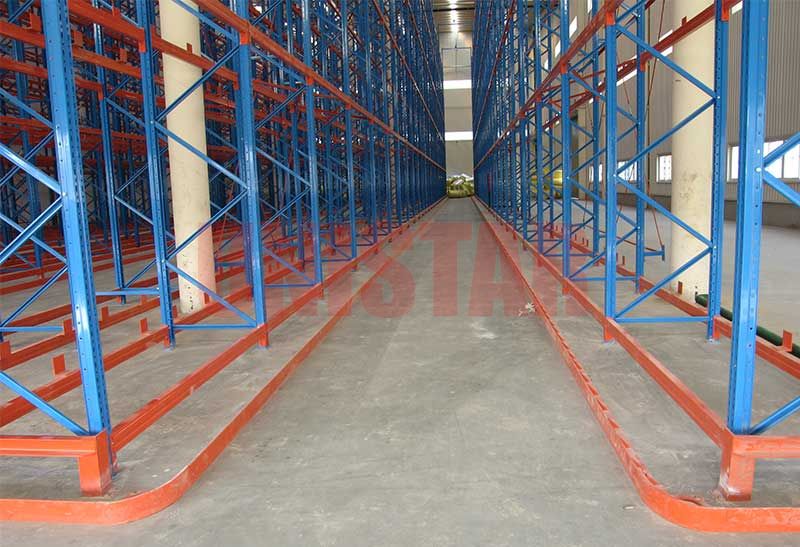
| Drive-In Racking | Large quantities of the same SKU and limited pallet variety | Drive-in normally operates from one side; drive-through provides access from both sides | The forklift enters the lane, so pallet consistency, guide clearance and operator protection are important |
| Radio Shuttle Racking | Deep-lane frozen storage with many pallets per SKU | FIFO or LIFO configurations are available | The forklift remains at the rack face while the shuttle moves pallets inside the lane; battery and component suitability must be confirmed for the operating temperature |
| Pallet Flow Racking | Date-sensitive inventory requiring continuous FIFO rotation | Separate loading and unloading aisles | Pallet bottom condition, roller spacing, braking and lane testing must match the actual unit load |
| Push Back Racking | Medium-depth storage with one operating aisle | LIFO/FILO | Pallet base design and load stability must be compatible with the carts or rails |
| Selective Pallet Racking | High SKU variety or frequent access to individual pallets | Direct access to every pallet | More operating aisles are required, but stock control and individual pallet access are simpler |
| Double Deep Racking | Moderate SKU variety with two-deep pallet storage | Front pallet must be removed before the rear pallet | Requires a suitable double-deep reach truck and accurate pallet positioning |
| Operational requirement | Suitable starting configuration | Reason |
|---|---|---|
| Maximum pallet positions for a few frozen SKUs | Drive-in or radio shuttle racking | Deep channels reduce the number of forklift aisles |
| FIFO movement of chilled or frozen products | Pallet flow or drive-through racking | Loading and unloading can be separated to maintain stock sequence |
| Frequent access to many different SKUs | Selective pallet racking | Each pallet position remains directly accessible |
| High-density storage without forklifts entering deep lanes | Radio shuttle or push back racking | Pallets move within the rack while the forklift stays in the working aisle |
| Reserve storage plus direct picking | High-density reserve lanes combined with selective racking | Bulk pallets and active picking stock can be managed separately |
| Future automated handling | Review the project under AS/RS solutions | Automation requires separate throughput, controls and equipment analysis |
Rack finish: Powder coating, pre-galvanized components or hot-dip galvanizing can be evaluated according to humidity, condensation, cleaning procedures and corrosion exposure.
Steel suitability: Steel grade and component performance must be checked against the project’s minimum operating temperature. Low-temperature suitability should not be assumed from a standard ambient warehouse specification.
Floor anchoring: Anchor locations and drilling depths must be coordinated with the insulated slab, vapor barrier, floor heating system and refrigeration contractor.
Forklift clearance: Aisle width must be calculated from the actual forklift data rather than a general warehouse estimate.
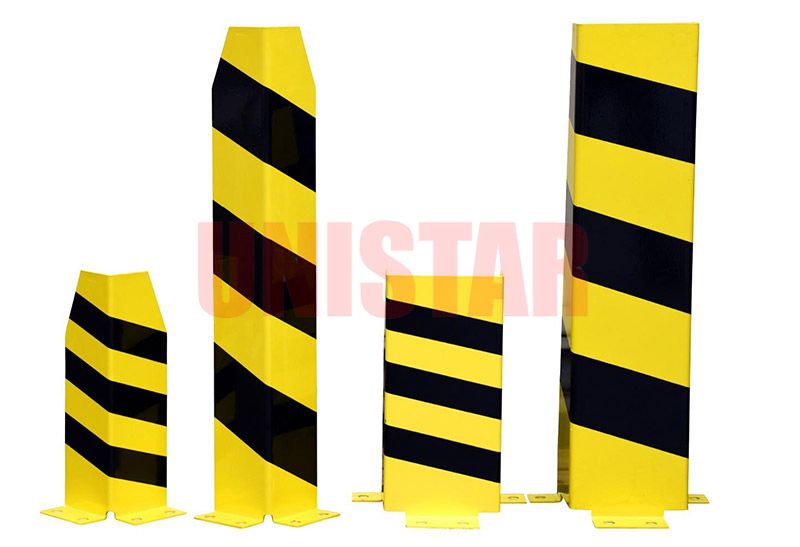
Rack protection: Upright protectors, frame barriers and guide rails can be specified where forklift impact risk exists.
Pallet compatibility: Pallet width, depth, entry direction, underside structure, maximum deflection and load distribution must be checked before deciding the rail or beam configuration.
Building coordination: Evaporators, pipes, doors, columns, emergency exits, sprinklers and maintenance areas must be shown on the warehouse drawing.
| Parameter | Why it matters |
|---|---|
| Warehouse internal dimensions | Determines row length, rack height and available operating aisles |
| Clear height | Limits the top storage level and required lifting height |
| Required pallet positions | Establishes the density target |
| Pallet dimensions | Determines bay width, lane width and rack depth |
| Pallet load height | Determines vertical level spacing |
| Maximum pallet weight | Determines beam, rail, upright and foundation loads |
| Number of SKUs | Influences the number and depth of storage lanes |
| Pallets per SKU | Determines whether selective or deep-lane storage is more suitable |
| Stock rotation | Separates FIFO requirements from LIFO-compatible applications |
| Daily pallet movements | Influences aisle quantity, rack type and handling equipment |
| Operating temperature | Affects materials, finishes, batteries and mechanical components |
| Project item | Reference information |
|---|---|
| Racking system | Hot-dip galvanized drive-in racking |
| Warehouse temperature | −15°C |
| Rack height | 8,400 mm |
| Pallet load | 1,500 kg per pallet |
| Lane depth | Nine pallets deep |
| Inventory method | FILO/LIFO |
| Total capacity | More than 3,400 pallet positions |
| Project location | Middle East |
This reference is an example of a completed configuration rather than a standard specification. Every warehouse racking system for cold storage must be recalculated according to the new warehouse, pallet loads, environmental conditions and applicable standards.
Recommend Products