Drive In Racking
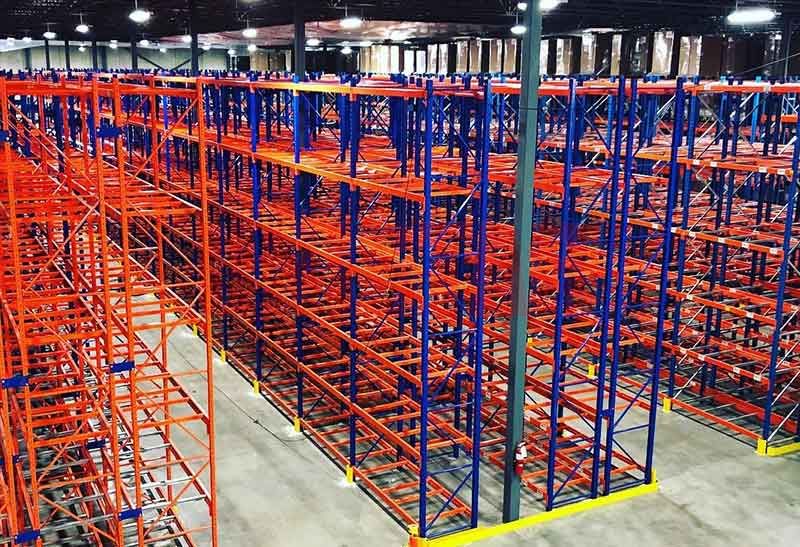
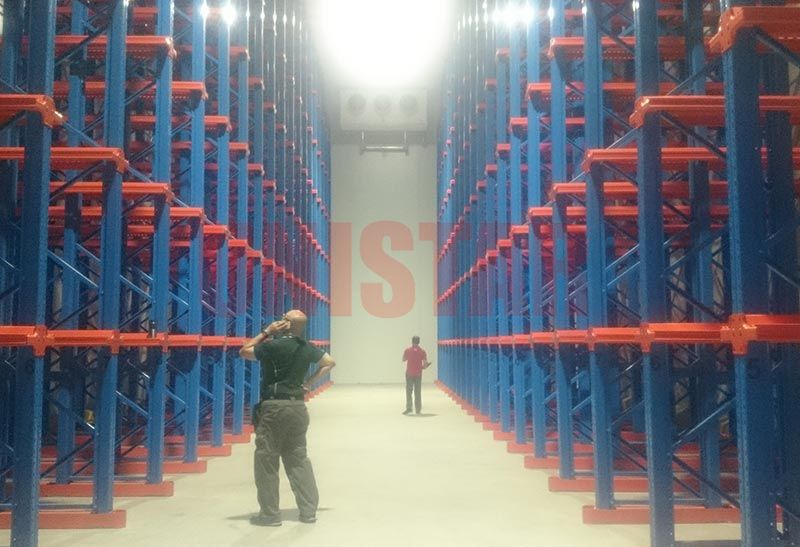
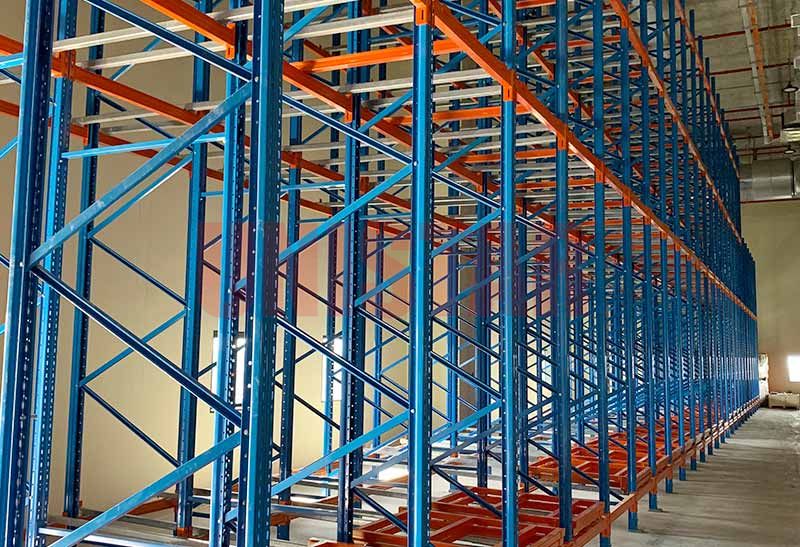
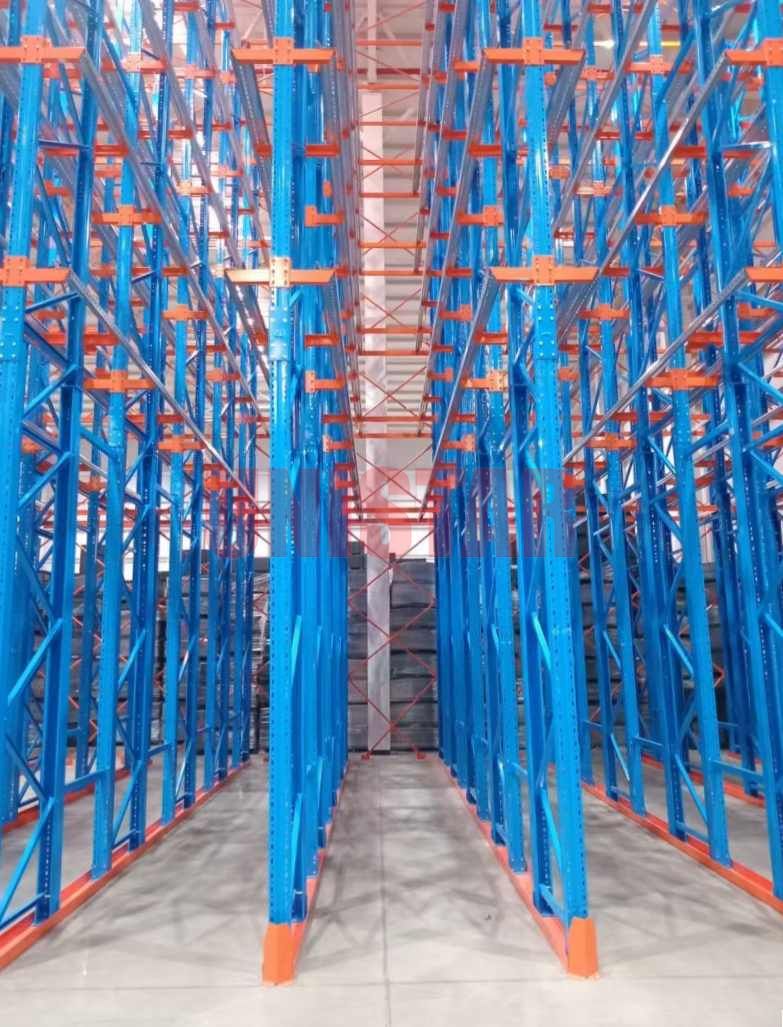
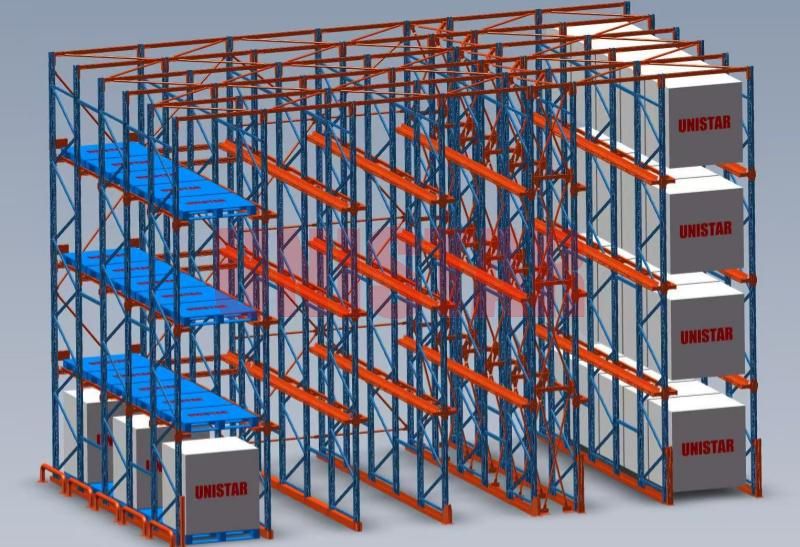
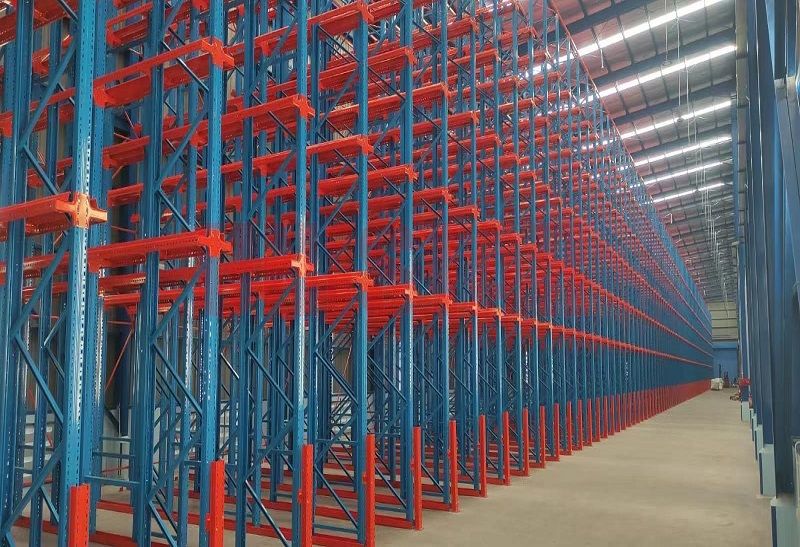
Drive-in racking is a high-density pallet storage system designed to maximize available cubic space by minimizing the number of aisles a truck needs to maneuver through, and features multiple levels of racking with deep aisles that allow a forklift to drive directly into the racking system to load and pick up pallets.
These racks can be configured in two ways: drive-in (where pallets are loaded and unloaded from the same entry point) or drive-through (where pallets are loaded from the front and unloaded from the rear, allowing access from both ends).
Products Description
Drive in Storage Racking System is a high-density warehouse racking solution designed for storing large quantities of palletized goods. It reduces the number of operating aisles by allowing forklifts to enter the storage lanes directly.
This system belongs to UNISTAR’s warehouse Racking range. It is available as drive-in racking or drive-through pallet racking. UNISTAR provides warehouse layout planning, structural design, load calculations, customized manufacturing, project consultation, export supply, and technical support. The system can be designed around pallet dimensions, load capacity, warehouse height, forklift type, seismic requirements, and inventory flow.

Advantages of Drive in Storage Racking System
Maximizing Space Utilization: It makes full use of available floor space and height, increasing storage capacity compared to traditional shelving systems.
Simple and Cost-Effective: This is the most straightforward high-density storage solution, requiring the lowest investment.
Configurable: The depth and height of the racks can be adjusted based on each customer’s needs and the characteristics of the goods being handled.
One or Two Aisles: This solution can operate with a single aisle (for loading and unloading from the front) or two aisles (loading from the front and unloading from the back).
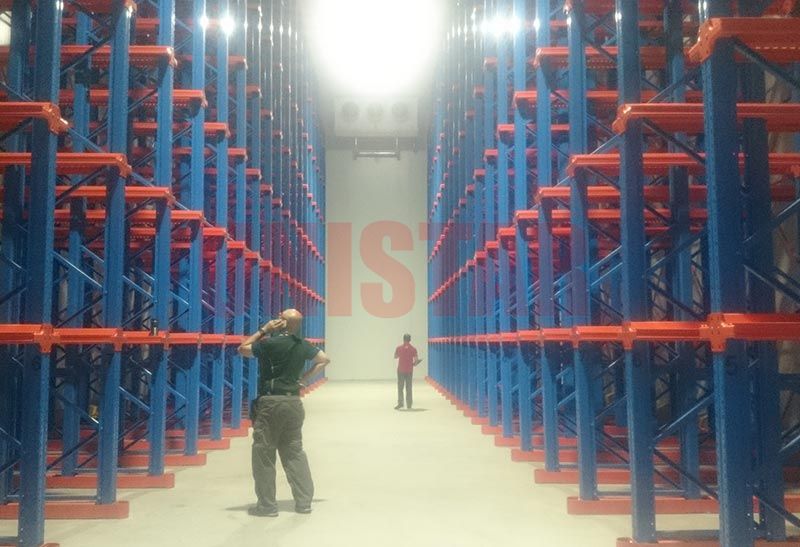
Energy Saving: With a smaller footprint, it reduces the surface area that needs to be cooled in cold storage and freezer warehouses.
Easy Inventory Management: Each aisle stores a single SKU, simplifying inventory control.
Compatible with Different Pallet Types: The racks can accommodate pallets of varying weights and sizes.

How It Works:
Drive-in and drive-through racking systems are designed to maximize storage density by allowing forklifts to enter the racking lanes to load and retrieve pallets. In drive-in racking, pallets are stored in a single lane, and goods are loaded and unloaded from the same aisle. In drive-through racking, pallets can be accessed from both sides, allowing for more flexible operations as goods are loaded from the front and unloaded from the rear.
This system uses vertical space efficiently, with multiple levels of racks that can be customized for different types of pallets, and it can be configured with one or two aisles depending on the layout and needs of the facility.
Advantages of a Drive in Storage Racking System
High storage density: Deep storage lanes reduce the space occupied by forklift aisles.
Better cubic space utilization: Multiple storage levels use both warehouse floor space and clear height.
Cost-effective configuration: The system provides compact pallet storage without powered shuttle equipment.
Flexible lane dimensions: Lane depth, rack height, and load levels can match the stored pallets.
Simple inventory organization: Each lane can be assigned to one SKU, batch, or product category.
Drive-in or drive-through options: Buyers can choose LIFO or FIFO operation according to stock rotation.
Cold storage efficiency: Compact storage reduces the refrigerated area required per pallet position.
Scalable design: Additional rack blocks can be added when warehouse capacity increases.
Compatible with different pallets: The structure can be designed for various pallet sizes and load weights.
Suitable for seasonal inventory: The system can hold large quantities of the same product during demand peaks.
Drive-In Operation
Loading and unloading take place from the same aisle.
The system normally follows the LIFO principle.
The last pallet stored is the first pallet retrieved.
It suits products with a longer shelf life and low stock rotation requirements.
Drive-Through Operation
Loading takes place from one side of the system.
Unloading takes place from the opposite side.
Two operating aisles are required.
The configuration can support FIFO inventory rotation.
Drive-In Racking vs Other Racking Systems
| Racking System | Pallet Access | Storage Density | Forklift Enters Rack | Inventory Method | Recommended Use |
|---|---|---|---|---|---|
| Drive-In Racking | By lane | Very high | Yes | LIFO | Many pallets per SKU |
| Drive-Through Racking | From both ends | Very high | Yes | FIFO | Batch rotation and buffer storage |
| Selective Pallet Racking | Direct access to every pallet | Moderate | No | Flexible | Many SKUs with frequent access |
| Double Deep Racking | Two pallets deep | High | No | LIFO | Higher density with moderate selectivity |
| Push Back Racking | Front access by lane | High | No | LIFO | Faster loading without rack entry |
| Pallet Flow Racking | Separate loading and unloading sides | High | No | FIFO | High-rotation or date-sensitive goods |
| Radio Shuttle Racking | Shuttle-controlled lane access | Very high | Limited | FIFO or LIFO | Deep lanes and frequent pallet movement |