SPR-Selective Pallet Racking
Selective pallet racking is the most widely used racking system, offering direct access to every pallet without the need to move others. Its versatility and durability make it an ideal storage solution for a wide range of facilities.
Products Description
Selective storage racking, often referred to as a Selective Racking System, is the most common and accessible type of pallet racking. As a core product in UNISTAR's storage solutions, this Selective Pallet Racking System is designed to provide direct, immediate access to every pallet in storage, making it ideal for warehouses with a wide variety of SKUs and high inventory turnover. Manufactured in-house by UNISTAR, a leading Chinese racking specialist, the system adheres to strict international standards (FEM/AS4084/EN/SEMA/RMI) to ensure structural integrity and long-term durability.

Selective Storage Racking Advantages
Increase storage capacity
Increase ease of inventory management
Reduces product transportation time
Compatible with most standard forklifts
Design allows for easy reconfiguration to fit specific products
Relatively low cost
How Does Selective Pallet Racking Work?
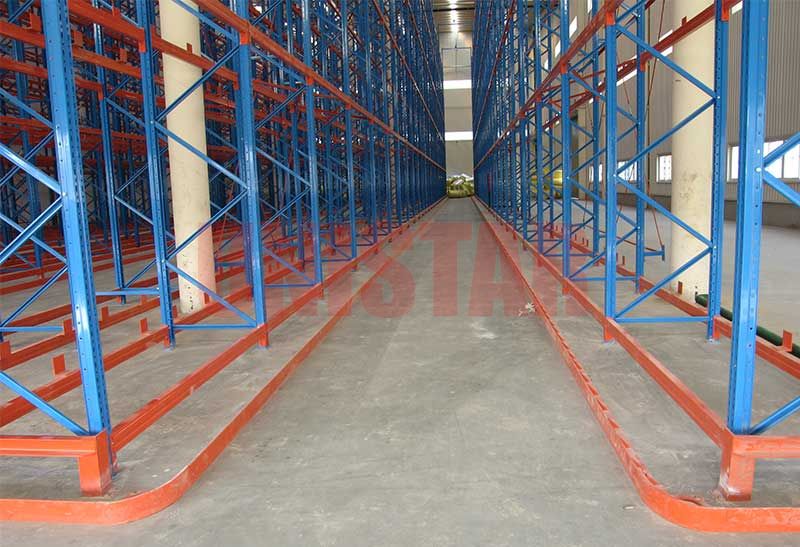
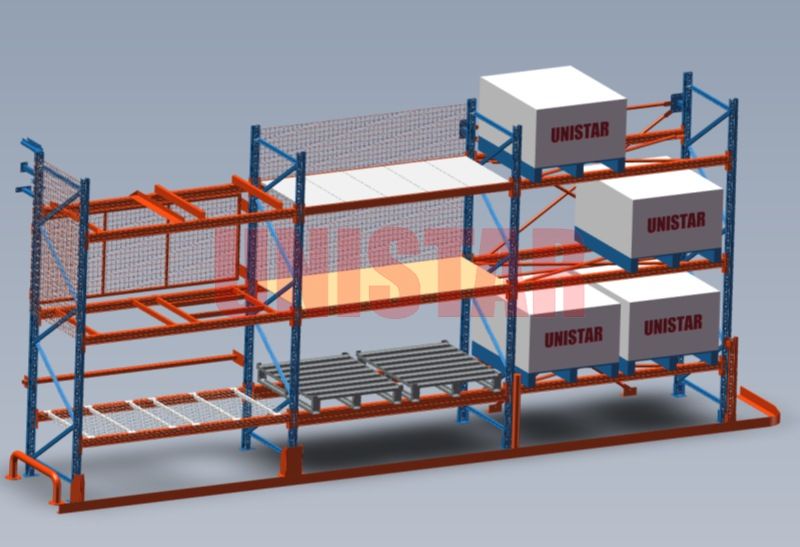
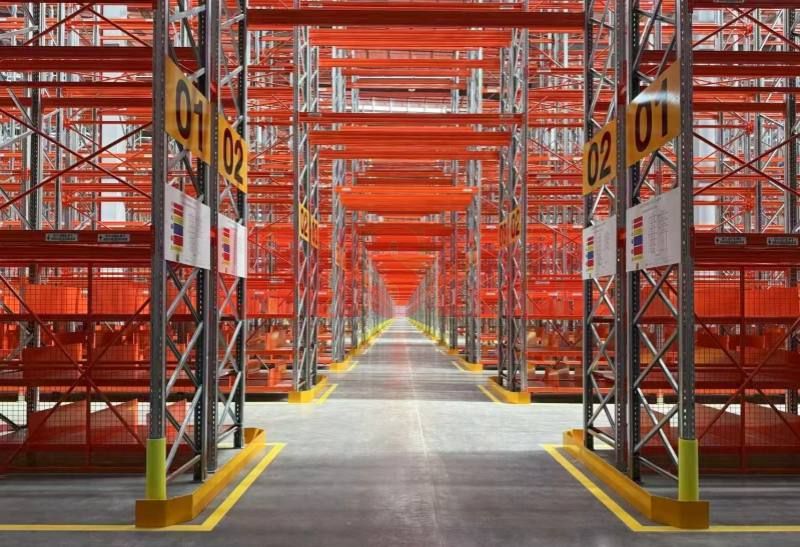
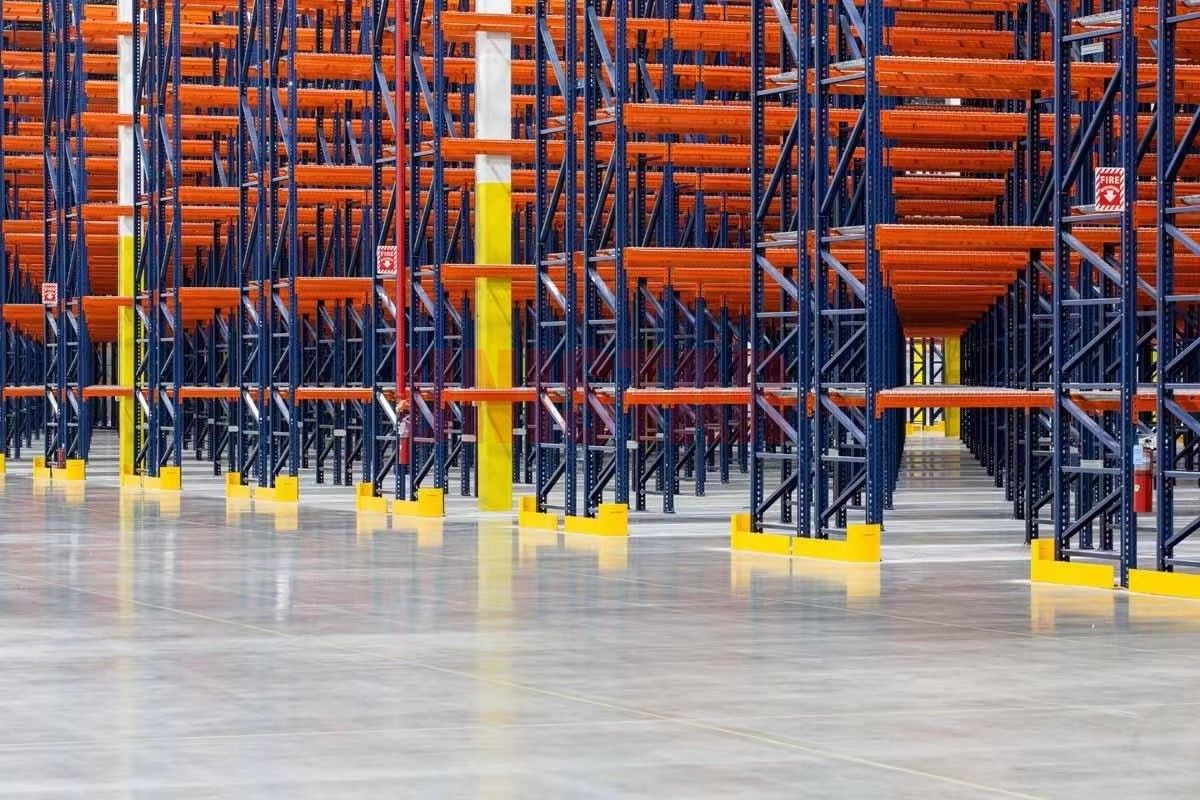
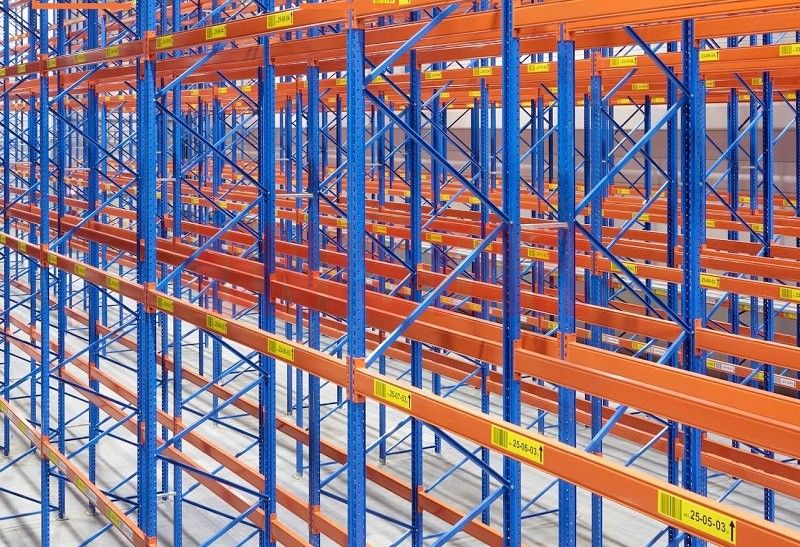
Selective Pallet Racking (SPR) is a widely used storage system designed for palletized goods, providing direct access to each pallet with the use of forklifts. Pallets are stored on horizontal load beams that are supported by vertical upright frames, forming multiple levels of storage.
Each pallet is stored in an individual bay, allowing for straightforward loading and unloading without the need to move adjacent pallets. Depending on the warehouse layout and operational needs, the system can support either First-In, First-Out (FIFO) or Last-In, First-Out (LIFO) inventory management.
This racking solution is especially suitable for facilities that manage a broad range of SKUs in smaller quantities, offering efficient stock rotation, quick accessibility, and streamlined inventory control.

Applications of Selective Storage Racking
Warehousing and Distribution Centers
Retail Storage
Food and Beverage Industry
Manufacturing Facilities
Cold Storage and Refrigerated Warehouses
Automotive and Spare Parts Storage
E-commerce Fulfillment Centers
Characteristic
● SPR is the most popular racking for pallets, people can reach any pallet at any time with a forklift. It provides easy beam adjustment and accommodates variable pallet heights.
● The Basic Information needed from clients: Pallet Dimension/Pallet Height including goods on it/Pallet Weight.
● Aisle Width is 3000mm minimum between pallets, except with special forklift which can turn around less than 3000mm.
● The height is fixed by two factors, warehouse clear height and forklift reaching height.
● The load capacity of each level is usually less than 4 tons, the total weight of the whole bay can reach 30 tons maxim according to the biggest profile of the uprights. 2 or 3 pallets each level is popular.
● Popular Colors: Blue Frames and Orange Beams. Blue: RAL5015, Orange: RAL2004.
● Installation: Very easy to assemble with Installation Instruction Brochure from UNISTAR.
Configuration
The selective storage racking from UNISTAR is highly adaptable and can be configured to meet specific warehouse needs.
Standard Configuration: Typically consists of rows of racks separated by aisles wide enough for forklifts to maneuver. Pallets are stored on horizontal beams, resting on rails, with each bay offering multiple storage levels.
Customizable Dimensions: The system can be engineered for various pallet sizes and weight capacities. UNISTAR’s engineering team can design configurations for different load requirements, from light-duty to heavy industrial loads.
System Integration: It can be used as a standalone system or integrated with other UNISTAR products, such as drive-in racking for higher density, or automated systems like stacker cranes for specific project needs.
Components
The UNISTAR Selective Pallet Racking system is built from high-quality, durable components designed for demanding warehouse environments.
Upright Frames: These vertical frames are the primary load-bearing structure, made from cold-rolled steel and designed with anti-seismic considerations by UNISTAR's experienced engineering team.
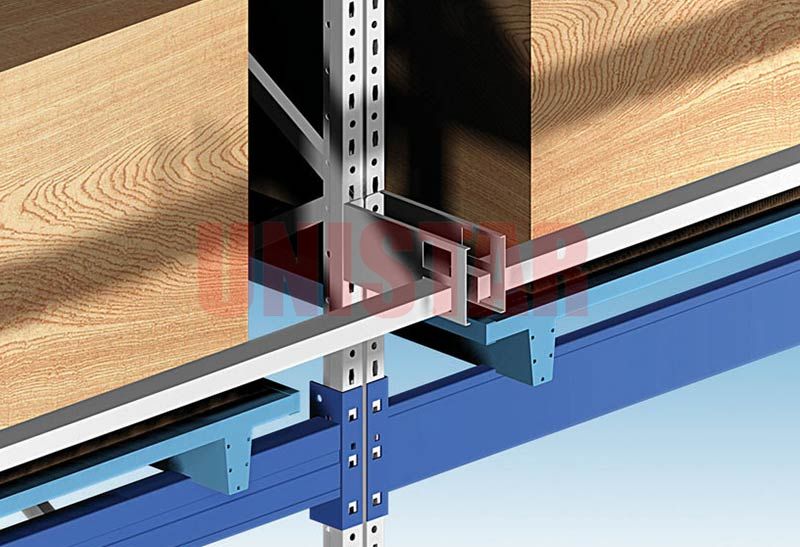
Beams: Horizontal beams lock securely into the upright frames to create storage levels. UNISTAR offers different beam profiles (e.g., box sections) to support varying load capacities.
Safety Accessories: The system can be equipped with essential safety components such as row spacers, column guards, back and front safety rails, and foot plates to ensure operational safety and protect the rack structure.
Frame Bracing: Diagonal and horizontal bracing welded between the front and rear columns of the uprights provides structural rigidity and stability.
FAQ
Q: What are the main advantages of choosing UNISTAR Selective Storage Racking?
A: It offers 100% direct access to every pallet, simplifying inventory management and FIFO (First-In, First-Out) rotation. It is also a cost-effective solution for general storage and is designed and manufactured by UNISTAR under strict international standards (FEM/AS4084/EN/SEMA/RMI) for guaranteed quality and longevity.
Q: Can the racking be adjusted for different pallet sizes?
A: Yes, a key benefit of selective racking is its adjustability. The beam levels can be easily repositioned along the upright frames to accommodate varying pallet heights, allowing the system to adapt to changing inventory needs.
Q: How does UNISTAR ensure the safety and stability of the racking?
A: UNISTAR's specialist engineering team performs detailed structural analysis, including seismic considerations for applicable regions. The in-house production process adheres to rigorous quality control, and a full range of safety accessories are available to protect the system from forklift impacts and ensure safe daily operation.
Q: What is the typical delivery time for a UNISTAR selective racking project?
A: With over 40 cold roll forming lines, UNISTAR is equipped for efficient production. For standard projects, this manufacturing capability enables delivery of the components to our customers within approximately two weeks, subject to project size and complexity.