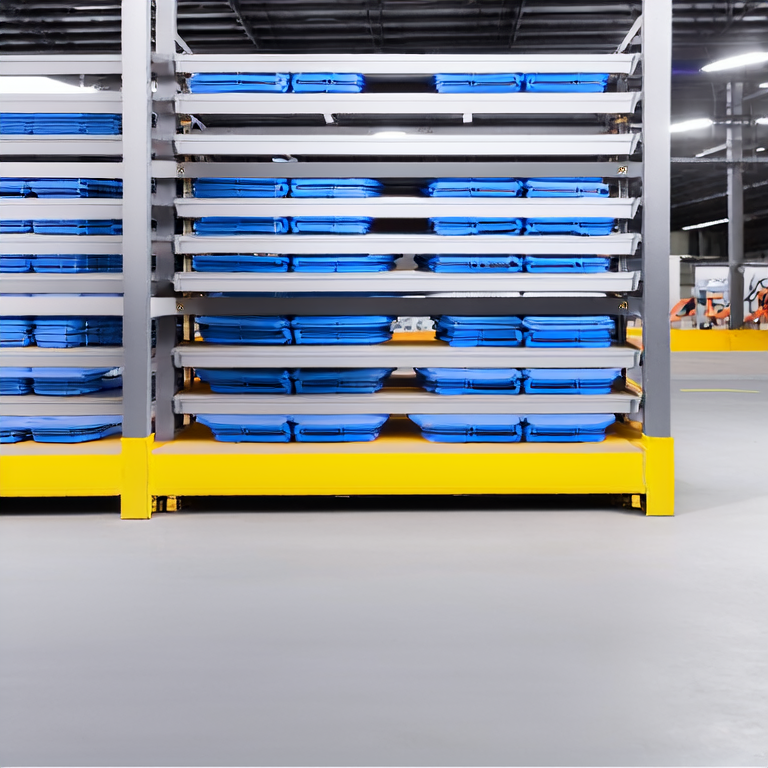
As we approach 2026, the demand for effective Selective Pallet Racking solutions is on the rise, driven by rapid growth in e-commerce and an increasing need for efficient warehouse storage systems. Businesses face pain points like limited space, disorganized inventory, and rising operational costs. These issues can obstruct efficient logistics and impact customer satisfaction. Solutions like UNISTAR's innovative selective pallet racking systems enable organizations to maximize vertical storage, improve accessibility, and boost retrieval speed. The implementation of such systems can reduce operational costs by up to 30%, thereby enhancing overall productivity.
The growth in warehouse storage solutions is propelled by several key drivers, including advancements in technology, increasing consumer demand for fast shipping, and the need for sustainable logistics practices. Innovations such as automated storage and retrieval systems (AS/RS) are transforming how warehouses operate, allowing for greater efficiency and accuracy. According to a report from the International Warehouse Logistics Association (IWLA) (2023), 60% of warehouses are set to integrate AS/RS by 2026 to meet growing demands. The continual evolution of warehouse management software (WMS) enhances real-time inventory tracking, further promoting efficiency.
Automation in warehouses is gaining significant traction. Recent studies show that operations utilizing automation can improve productivity by 25-35%. Robotics in order fulfillment is set to reduce labor costs by approximately 20%, as indicated by a report from McKinsey & Company (2023). Companies are adopting these technologies not only to streamline operations but also to mitigate labor shortages.
The push for sustainability is reshaping warehouse storage solutions. According to a survey by the DHL Supply Chain (2022), 79% of logistics companies are actively pursuing eco-friendly facilities. Initiatives such as energy-efficient lighting and sustainable packaging materials are becoming standard. Companies that invest in such sustainable practices can see a potential cost reduction of 20% on energy bills.
Data analytics, powered by the Internet of Things (IoT), is enabling warehouses to evolve into smart operations. Utilizing data for predictive analytics optimizes inventory levels, resulting in a 15% reduction in excess stock, as reported by the Gartner Research (2023). IoT devices facilitate real-time monitoring, ultimately leading to better decision-making processes.
As safety regulations evolve, warehouses are investing in technology that improves safety standards. A significant 65% of companies are enhancing their safety measures through improved training and technology adoption. According to the Occupational Safety and Health Administration (OSHA) (2022), proper safety measures can reduce workplace accidents by up to 40%, underscoring the financial benefits of compliance.
With these trends, buyers can expect significant shifts in how warehouses operate. The integration of automation, for instance, means buyers will need to adapt to new technologies and potentially retrain their workforce. Sustainable solutions may also lead to initial higher costs, but the long-term savings will provide a compelling return on investment. Buyers must be prepared to assess the total cost of ownership, not just the upfront expenses, as smart logistics will drive higher efficiency and lower broader operational costs.
1. **Invest in Training**: Companies should prioritize continuous training for employees to adapt to new technologies and systems effectively.
2. **Evaluate Technology Needs**: Assess your unique warehouse requirements to determine the best technology solutions. Consider working with providers like UNISTAR for tailored solutions.
3. **Plan for Scalability**: Choose storage solutions that can grow with your business, such as modular selective pallet racking systems that can adjust as inventory fluctuates.
4. **Conduct Regular Assessments**: Regularly review your systems and processes to identify areas for improvement and adopt innovations quickly.
Q: How can I choose the right selective pallet racking system?
A: Assess your warehouse size, inventory turnover rate, and load capacities to select a racking system that maximizes space and improves efficiency.
Q: What is the typical return on investment (ROI) for automated warehouse systems?
A: Generally, organizations can expect an ROI within 1-3 years, with automation improving accuracy and reducing labor costs significantly.
Q: Are sustainable warehouse practices worth the investment?
A: Yes, although upfront costs can be higher, sustainable practices can save substantial amounts in energy and waste management, leading to long-term financial benefits.